
2026 Conference recap
Harness the pressure.
Build bolder benefits.
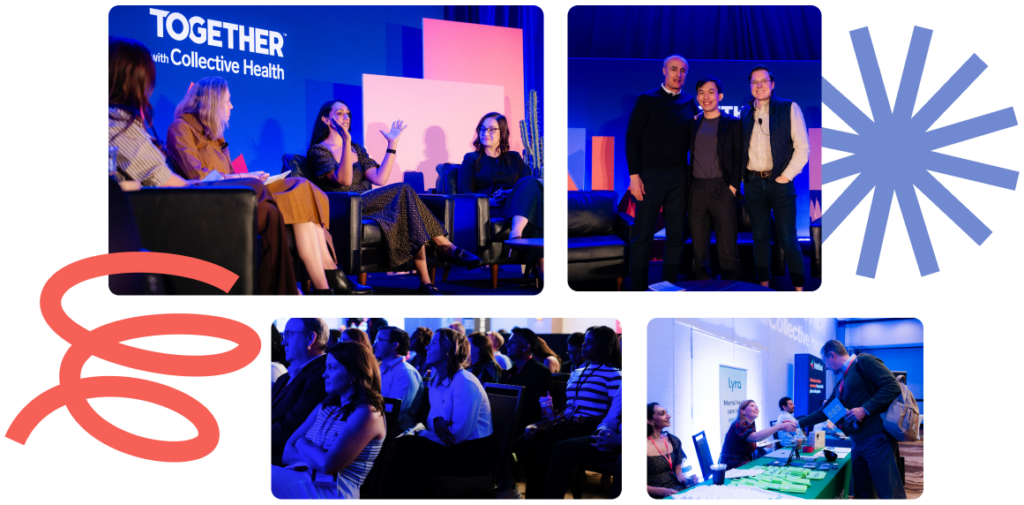
At Together 2026, HR leaders, benefits innovators, and forward-thinking partners gathered in Scottsdale to harness the pressures of modern healthcare and turn them into strategic power. From March 4-6, attendees explored bold approaches to rising costs, fragmented care, and workforce complexity — transforming challenges into opportunities to take control of health plans. Through dynamic panels, collaborative sessions, and networking opportunities, participants left with actionable, data-driven insights to simplify navigation, improve outcomes, and deliver a stronger, more empowered healthcare experience for their employees.
Day 1: Together Conference
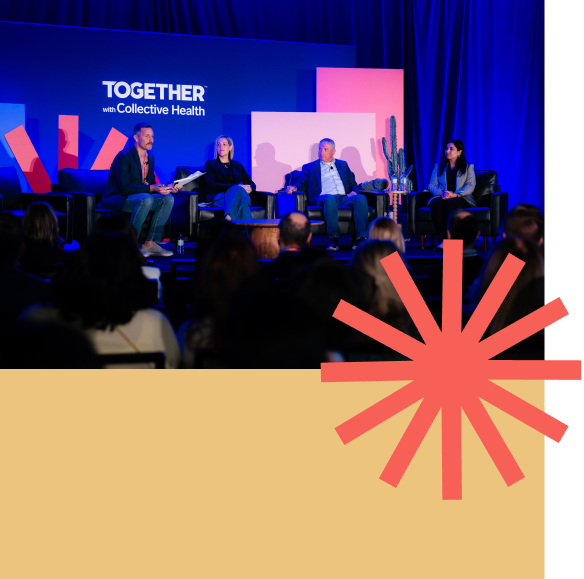
Panel #1: Redesigning the Rules: Bold Moves in Benefits Design
Andor Molnar, Manveen Mahal, Tabitha Pittman, Dane Thorwaldson
Kicking off the conference, Collective Health CEO Ali Diab set the stage for an open, honest dialogue on challenging the status quo in benefits, leading into a first session on how benefits leaders are shifting from reactive renewals and cost-shifting toward proactive strategies that serve diverse, geographically dispersed workforces.
Dane Thorwaldson (Collective Health) opened the discussion: “A panel is only worthwhile if we can walk away with something actionable.” The conversation centered on the principle that the best way to save money is to make care easier to access, not harder.
The Onsite Strategy: Manveen Mahal (The Wonderful Company) highlighted the impact of onsite clinics for agricultural and production employees: “The idea is that they don’t have to take time off… or wait two months. They’re able to do that during work hours.” These clinics offer advanced primary care, behavioral health, physical therapy, and health coaching, helping employees navigate barriers to care while building trust in their benefits.
The Manufacturing Reality: Andor Molnar (Daikin) described the value of early intervention in high-risk environments: “Getting them treated now, before it becomes full-blown diabetes, is significant savings.” Onsite health programs, preventive screenings, and wellness initiatives help avoid costly downstream claims while improving employee outcomes.
The Benchmark Trap: Tabitha Pittman (Integrity) challenged conventional reliance on industry norms: “I’m not really worried about the benchmark, because the insurance company made the benchmark. What I’m worried about is what my people need.” By focusing on employee needs instead of external benchmarks, benefits leaders can align strategy with long-term business and health outcomes.
Actionable Insight
Shift from cost-shifting to risk-shifting. Programs like $0 cancer screenings, preventive care, and health coaching help catch conditions early, reducing high-cost claims and improving employee health. As Tabitha emphasized, thoughtful benefit design “improves people’s quality of life or that of their families.
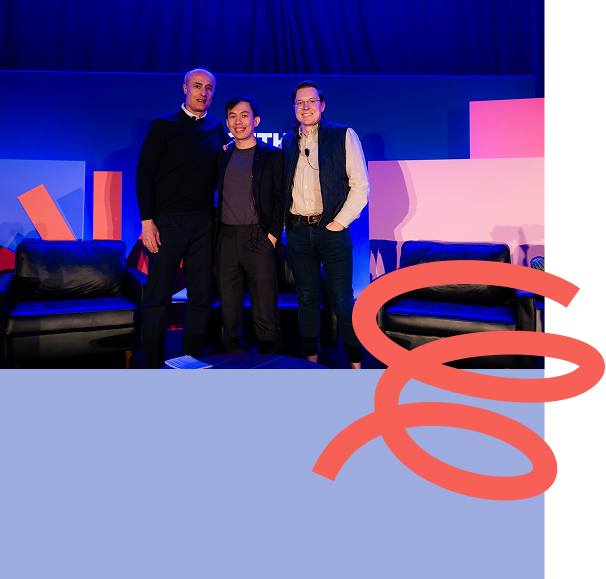
Panel #2: From Dr. Google to Dr. Claude: How AI is Transforming Diagnosis and Clinical Practice
Dr. Ethan Goh, Paxton Maeder-York, Ali Diab
This panel explored how generative AI is evolving from a consumer tool into a powerful assistant for clinicians and patients alike – helping reduce administrative burden, improve navigation, and surface insights from complex health data.
Collective Health CEO Ali Diab led a discussion with Paxton Maeder-York (Anthropic) and Dr. Ethan Goh (Stanford ARISE) on what the next wave of AI-enabled healthcare could look like.
From Chatbots to “Agentic” Systems: AI is moving beyond simple question-and-answer tools toward systems that can integrate data and complete tasks across multiple workflows. “Instead of just sending and receiving information, you can finally integrate data from across all these different avenues… it gives you much, much more specific information about your health,” said Paxton Maeder-York. These systems could eventually connect benefits information, medical history, and clinical guidance in one place — making healthcare navigation simpler for members.
Reducing Administrative Burden for Clinicians: Panelists emphasized that one of AI’s biggest near-term opportunities is reducing the documentation and workflow burden that contributes to clinician burnout. “A lot of doctors cry out — too much paperwork,” said Dr. Ethan Goh. “It’s a matter of when every single doctor will have an AI assistant… spotting patterns that I don’t have the first five or ten minutes to drill down.” Rather than replacing clinicians, AI tools are expected to act as powerful assistants, helping analyze large volumes of data and flag issues that require human judgment.
Mind the Gaps — Harms of Omission: Panelists cautioned that AI isn’t perfect. Dr. Ethan Goh noted, “We found that over 50–60% of harms of omission… neglects to say things that are important, and the issue there becomes a patient doesn’t have the judgment right.” Even as AI reduces administrative burden, careful oversight is essential to ensure patients get complete, actionable guidance and aren’t misled by partial or missing information.
Early Days — With Guardrails Needed: Despite rapid progress, the panel emphasized that AI adoption in healthcare is still early and requires careful evaluation. “It’s early days,” Maeder-York noted, emphasizing the need for safety testing and strong benchmarks before deploying AI broadly in clinical environments. Collaboration between technology companies, clinicians, and regulators will be essential to ensure systems are safe, transparent, and effective.
Actionable Insight
Start asking vendors about their AI roadmap and governance approach. As AI becomes embedded in healthcare workflows — from care navigation to clinical decision support — employers should ensure partners are prioritizing safety, data protection, and measurable outcomes, not just new features.

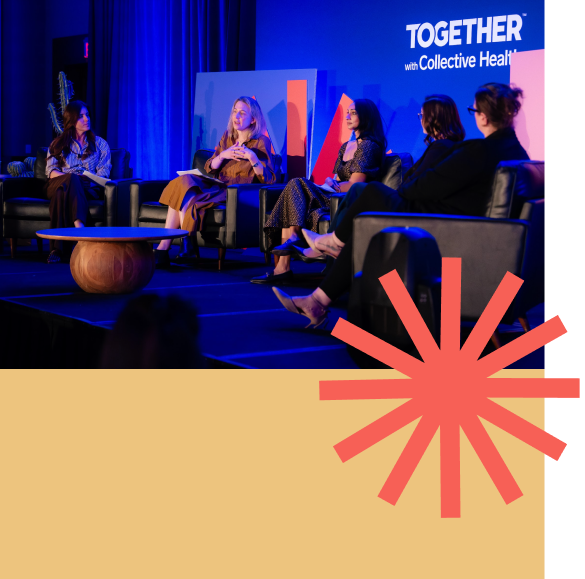
Panel #3: Women’s Health at Work: From Point Solutions to Connected Care
Bijal Toprani, PT, DPT (Hinge Health), Caroline Shanholtz, PhD (Lyra), Halle Tecco, Hilary Bartlett (Carrot), Jenny Buntich
This panel explored moving from fragmented apps to an integrated ecosystem of care for women and families — aiming to eliminate the “Navigation Tax” that overburdens members by creating warm handoffs between mental health, physical therapy, and reproductive specialists.
The discussion, moderated by industry luminary and author of “Massively Better Healthcare,” Halle Tecco, emphasized that women’s health is a business imperative, not a niche DEI goal. Jenny Buntich (Collective Health) opened with a call to action: “Historically, women are suffering in silence… there is such tremendous value in removing that veil.”
Whole-Person Integration: Dr. Caroline Shanholtz (Lyra) highlighted the value of bi-directional referrals: “Treating …issues simultaneously… removes the burden because she’s not having to figure out the exact right provider for each symptom.” Connected care ensures employees receive mental, physical, and reproductive support without navigating multiple disconnected solutions.
The Fertility Reality: Hilary Bartlett (Carrot) debunked a common misconception: “50% of our active membership at Carrot is male. The job of being healthy enough to get pregnant is a job for both intending parents.” Fertility care and planning are shared responsibilities, and benefit programs should reflect this reality.
Personalization at Scale: Dr. Bijal Toprani (Hinge Health) highlighted the perimenopause gap: “About 43% of our membership are women of perimenopause age… we saw an opportunity to personalize the experience for them.” Tailored support across menopause, musculoskeletal health, and mental health improves outcomes and engagement.
Actionable Insight
Look for “Connected Care” partners. If MSK, mental health, and fertility vendors aren’t sharing data to trigger warm handoffs, your employees are paying the navigation tax — losing time, energy, and health while navigating a fragmented system.
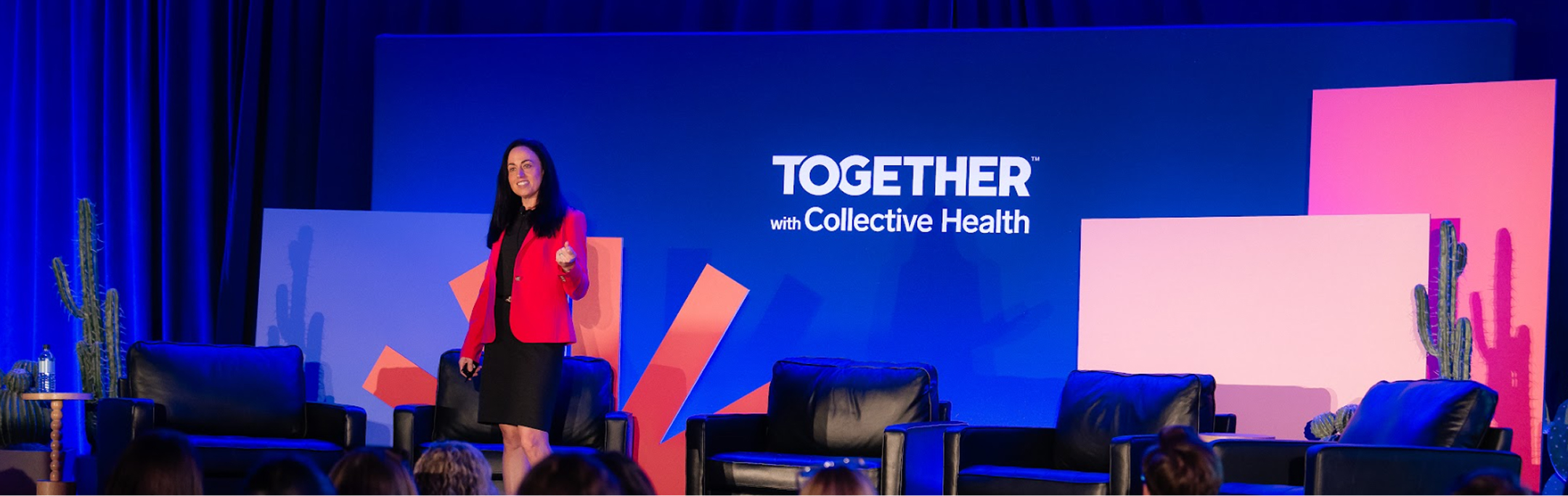
Keynote with Amy Morin
Midway through the day’s programming, the conference paused to zoom out from tactical discussions on benefits design and healthcare innovation to focus on the personal resilience required to lead through complexity.
Psychotherapist and bestselling author Amy Morin shared a keynote on the habits that undermine mental strength — and the practical strategies people can use to build resilience in work and life.
Amy explained that many of the thoughts that drain our energy stem from three types of unhealthy beliefs: negative beliefs about ourselves, distrustful beliefs about others, and pessimistic beliefs about the world. These beliefs can lead to common traps such as dwelling on past mistakes, comparing ourselves to others, focusing on things we can’t control, or constantly anticipating worst-case scenarios.
Rather than trying to eliminate these thoughts entirely, Amy encouraged the audience to develop simple mental strength “plays” they can use in the moment:
- Reframe negative self-talk by replacing harsh self-criticism with realistic, supportive language.
- Create a “victory vault” of past accomplishments to revisit before challenging moments.
- Take out the mental trash by writing down unproductive thoughts and physically discarding them.
- Change the channel when rumination starts by shifting focus to a different activity.
- Schedule time to worry so concerns don’t dominate the entire day.
- Give yourself an “inner strength gold star” each day by recognizing one action that helped you grow mentally stronger.
Drawing from her own experiences with loss and adversity, Amy reminded the audience that resilience isn’t about avoiding hardship — it’s about recognizing the patterns that hold us back and choosing healthier responses. Her message reinforced a key theme of the conference: meaningful progress often begins with small, intentional mindset shifts.
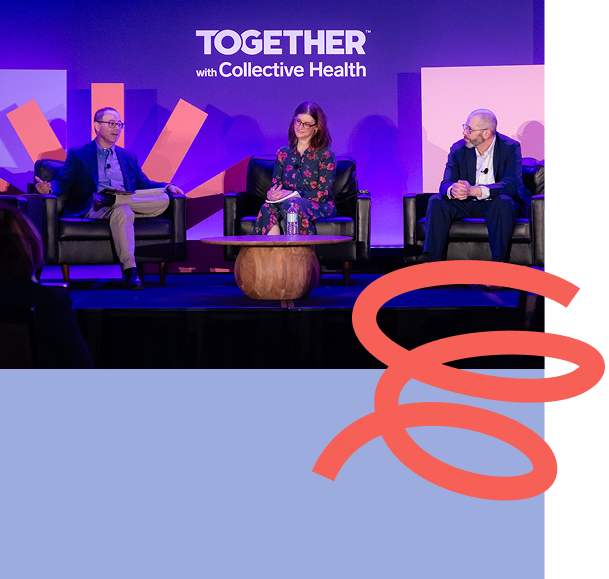
Panel #4: The Price of Misalignment: Achieving True Health Plan Transparency
Ron Peck, Stacey Richter, Ron Bell
This session examined how misaligned incentives across the healthcare system can drive up costs — and how employers can gain better visibility into their plans.
Moderator Ron Bell (Collective Health) led a lively discussion with Stacey Richter (Relentless Health Value Podcast) and Ron Peck (The Phia Group) on understanding vendor incentives, pricing, and quality data.
Incentives Shape Outcomes: When vendors are paid based on overall spending, costs can rise without improving care. “If you’re paid for more money being spent, then you’re incentivized to let costs go up. That’s where the misalignment starts,” Stacey Richter explained. Greater transparency into pricing and fees helps employers ensure incentives align with plan goals.
Price Doesn’t Always Equal Quality: Employees often equate higher prices with better care, which can increase spending. “I’m not going to the dollar store of hospitals. I’m going to the $100,000 one because they must be better,” Ron Peck said. This isn’t always the case. Pairing price transparency with quality data and plan guidance helps employees make smarter choices.
Start With the Contract: Contracts dictate how much data employers can access. Reviewing agreements for pricing disclosures and “gag clauses” is a key first step. “Read your contract. The first three pages tell you what you want to hear; the next 60 tell you why they’re not going to do it,” Ron Peck advised.
Actionable Insight
Ensure your contracts allow full access to plan data. Under the Consolidated Appropriations Act, plan sponsors have the right to line-item pricing data — essential for uncovering hidden costs and aligning incentives with true plan health.
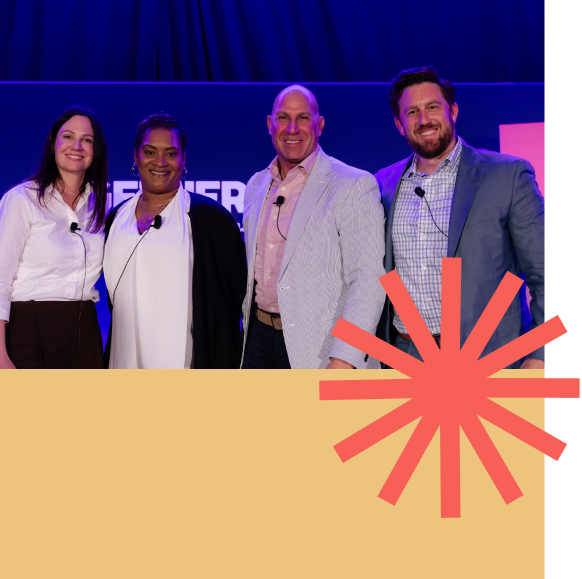
Panel #5: From Concept to Care: How Direct Contracting is Gaining Ground
Ben Maisano, James Startare, Rhonda Wright, Jaclyn Rielly
Our final session explored how employers are exploring direct contracting — seeking better cost control, improved access, and stronger outcomes through approaches like premier tiers, bundled payments, point solutions and curated provider networks.
Moderator Jaclyn Rielly (Collective Health) framed the shift as employers taking a more active role in redesigning how care is purchased and delivered.
Leaders from Aramark and Academy Sports shared how they are building tailored networks that better reflect the realities of their workforces.
The Local Brand: James Startare (Aramark) described the importance of local market alignment when building direct contracts: “Healthcare is local or regional… We even named the plan like the Penn Medicine Premier Plan.” He also noted strong provider interest: “Nine out of ten — if not 9.5 times out of 10 — they’re equally frustrated and interested to have the conversation.”
The Dispersed Workforce: For employers with geographically distributed teams, flexibility is critical. Rhonda Wright (Academy Sports + Outdoors) emphasized: “Direct contracting is not a one-size-fits-all.” She also highlighted the success of point solutions for virtual and flexible care: “Because it’s 100% paid by Academy… they have really grasped that concept.”
The “Whole Car” Approach: Ben Maisano (Tendo) encouraged employers to rethink how healthcare is purchased, moving beyond piecemeal claims toward bundled payments: “Look at the whole car… and try to transact at that level.” He added: “Direct contracting isn’t just transparent pricing — it can actually be a lot more.”
Actionable Insight
Start with your claims data. Identify the top drivers of spend (for many employers: maternity, orthopedics, and imaging) and explore direct contracts, bundled payments, and point solutions with high-quality local providers. Employers on the panel reported that these arrangements can significantly improve value while simplifying the care experience.
What an incredible few days in Scottsdale! We are so grateful to the leaders, experts, and industry disruptors who joined us at Together 2026. Your active participation, honest exchange of ideas, and willingness to challenge the status quo transformed this event into a true masterclass in turning “Pressure into Power.”
Ready for Together 2027?
Sign up for Together 2027 Early Bird registration
Listen to The Benefits Playbook Podcast
Learn more about
Collective Health
Want to get together in 2027?
Sign up to our monthly newsletter to get updates about our 2027 conference & calendar of events!